


- Cupiorose = aroace microlabel (no attraction, yes desire for rom/sex ties). Coined in 2024.
- Flags: purple-to-pink. Vs. cupioromantic.
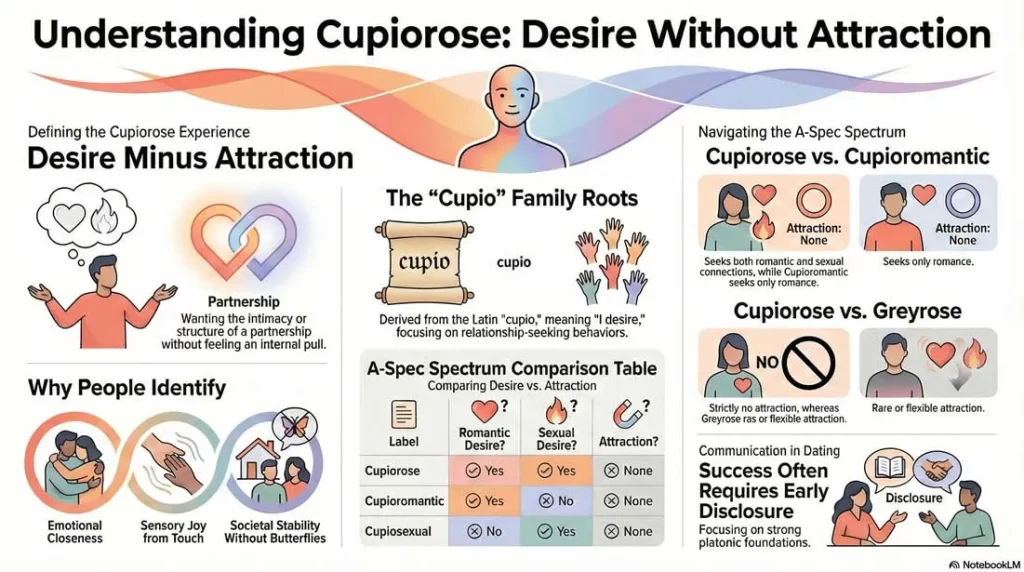
What Is Cupiorose?
Cupiorose is a microlabel on the aromantic and asexual spectrum. It describes people who experience no romantic or sexual attraction but still desire romantic or sexual relationships. Think of it as wanting the companionship, intimacy, or structure of a partnership without the internal pull of attraction.
This term fits under aroace identities, where someone might crave cuddling, dates, or even sex for emotional closeness or curiosity, not because someone specific lights them up romantically or sexually. It’s part of the broader “cupio” family, from Latin “cupio” meaning “I desire.”
Many in the a-spec community use cupiorose to explain this disconnect. You don’t feel butterflies for anyone, yet the idea of sharing life with a partner appeals. Synonyms like “desire-favorable aroace” or “relationship-seeking aromantic asexual” pop up in discussions, but cupiorose nails the dual romantic-sexual aspect.
Other Close Contenders
- Cupioromantic: Near-identical but romantic-only (add cupiosexual for full cupiorose).
- Idemaroace: Can’t distinguish platonic vs. romantic/sexual; uses context.
When the Word “Cupiorose” Coined?
The term Cupiorose got coined on April 4, 2024, by a user named Genderisamusing on the Orientation Wiki. It built on earlier “Cupio” labels like cupiosexual (coined around 2021) and cupioromantic, which describe desire without attraction in one area.
Before Cupiorose, people might have used “Kalosromantic” or just “Cupio aroace,” but this combined label clarified wanting both romantic and sexual connections despite being aroace. It emerged amid a wave of a-spec microlabels on Tumblr, Reddit, and wikis, helping folks articulate nuanced experiences.
How Cupiorose Differs from Similar Labels?
Cupiorose covers both romantic and sexual desire without attraction, unlike Cupioromantic (romantic only) or cupiosexual (sexual only). A cupioromantic might want dates and hand-holding but not sex; cupiorose could seek both.
Compare to greyrose (rare, flexible attraction) or quoiromantic (attraction doesn’t fit romantic frame)—cupiorose is strictly no attraction, pure desire. It’s “oriented aroace”: no pull, but favorable to relations, not “angled” (attraction to fictional/types).
Read More : Understanding Graysexual & Lesser-Known Labels: The Complete Guide
| Label | Attraction | Desire for Romantic? | Desire for Sexual? | Best For |
|---|---|---|---|---|
| Cupiorose | None | Yes | Yes | Both relationships |
| Cupioromantic | None romantic | Yes | No | Romance only |
| Cupiosexual | None sexual | No | Yes | Sex only |
| Greyrose | Rare/flexible | Varies | Varies | Occasional attraction |
| Oriented Aroace | None | Yes (one or both) | Yes (one or both) | Broad umbrella |
Why Do People Identify as Cupiorose?
For many, it’s about practicality. You might enjoy sex for pleasure or romance for stability, without “wanting” specific people that way. Reasons include:
- Emotional intimacy without romantic butterflies.
- Societal pressure—wanting marriage/kids sans attraction.
- Sensory joy from touch or shared routines.
- Questioning phase: “Am I ace/aro but love relationships?”
People identify as Cupiorose after realizing they lack romantic/sexual attraction but strongly want those relationships anyway—often through self-reflection or community exposure.
Relationships as Cupiorose
Dating looks different. Communicate early: “I desire this but won’t feel attracted like you might.” Many date allo partners open-mindedly or seek fellow a-spec folks via apps like Feeld.
Challenges: Explaining to partners; avoiding “you’ll catch feelings later.” Tips:
- Use contracts for expectations.
- Focus on platonic love bases.
- Therapy for confusion (aroace-affirming)
Cupiorose people find partners by prioritizing a-spec friendly spaces, upfront communication, and mutual understanding of “desire without attraction.
What Defines Desire vs. Attraction for Cupiorose?
For cupiorose individuals, attraction is an involuntary internal pull or “spark” toward specific people—romantic butterflies or sexual arousal—that’s absent. Desire is a conscious want for relationships or intimacy itself, like craving companionship or touch.
Key Distinction
Attraction: Spontaneous, person-specific (e.g., “I want them romantically”). Cupiorose folks feel none.
Desire: General preference for benefits (e.g., “I want a partner’s stability, sex for pleasure”). Chosen, not chemistry-driven.
Cupiorose FAQ
What Does Cupiorose Mean Exactly?
Cupiorose means aromantic asexual (no attractions) yet desiring romantic/sexual ties—like intimacy without sparks.
Cupiorose vs. Cupioromantic? What is the difference?
Cupioromantic desires romance only; cupiorose wants both romance and sex without attractions.
Can Cupiorose People Date Allosexuals?
Yes—many do successfully with clear communication about chosen vs. attracted bonds.
What’s the Difference from Greyrose?
Greyrose involves rare/flexible attractions; cupiorose has none, pure desire.
How Common Is Cupiorose?
Rare microlabel, but cupio terms appear in 1-5% of a-spec discussions per community polls.
Cupiorose: Final Words
Cupiorose defines aroace individuals lacking romantic/sexual attraction yet desiring those relationships—think intimacy without sparks. Coined 2024 from “cupio” (desire), it features purple-to-pink flags symbolizing transition. oriented aroace—no pull but openness to partnerships. Differs from Cupioromantic (romance-only) or caedaroace (trauma-severed).
Sources:
Definition: To orientation.fandom.com/wiki/Cupiorose.